Moses’s contrast between Egypt and the Promised Land is a fascinating pointer to the new creation life in Christ Jesus.
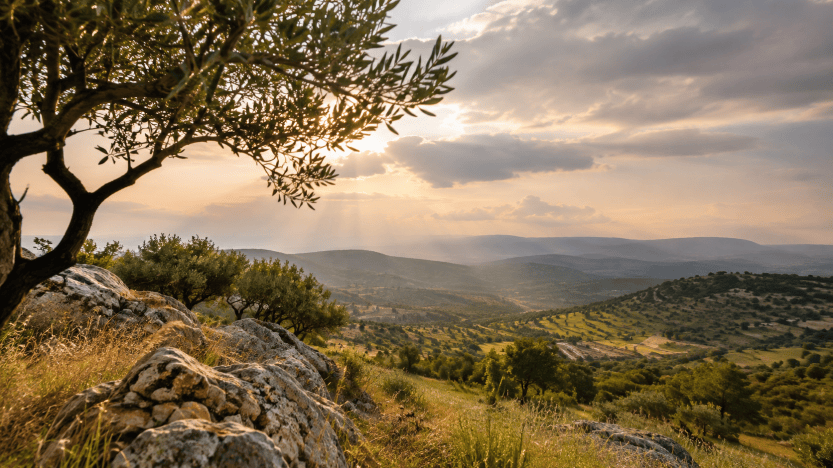
The fundamental difference Moses articulates centers on the following: Egypt required manual irrigation—“you sowed your seed and irrigated it, like a garden of vegetables”—while the Promised Land operated on an entirely different principle as “a land of hills and valleys, which drinks water by the rain from heaven.” (Deut 11:9–12)
This comparison demonstrates that Egypt depended on human initiative and effort, whereas the Promised Land would be freely watered by divine gift.
Egypt represents struggle and self-effort.
The Promised Land represents rest from struggle and self-effort through God’s divine attentiveness: the land is one “that the LORD your God cares for. The eyes of the LORD your God are always upon it, from the beginning of the year to the end of the year.”
Hebrews 4:1-11 describes the Promised Land as pointing toward God’s “rest”: a spiritual reality that believers enter through faith, where they cease from their own works as God did from His.
Just as the Israelites moved from labor-intensive Egypt to God’s provision in Canaan, believers transition from the “works” of the old life to the grace-sustained life in Christ.
The shift from human effort to divine provision becomes the crucial point.
The believer in Christ has crossed from death to life, from the kingdom of darkness into the kingdom of light. It is a life of promise, through which we become partakers of His divine nature (2 Peter 1:4).
This does not suggest the absence of work, trials or tribulations. Rather, it speaks to the reality of a life under God’s continual care and provision.
We work, but we do not have to live a life of striving. We plant and water, but God gives the increase (1 Corinthians 3:6–7).
Even the desire, motivation and strength to work are supplied by Him, for it is God who works in us both to will and to do of His good pleasure (Philippians 2:13).
The contrast is not between work and idleness, but between self-dependence and dependence on God’s sufficiency.


We work, but we do not have to live a life of striving. We plant and water, but God gives the increase (1 Corinthians 3:6–7).
This paragraph aptly describes what it means to enter his rest. It makes more sense now.
LikeLike